

Why Most Podcasts Fail After 5 Episodes
That is rarely the problem.
Most podcasts fail around episode five because the exciting part is over.
The name has been chosen. The cover art is finished. The trailer is published. A few friends have commented, “This is so good!” The launch post is out, the quote graphic is made, and maybe there is even one of those little waveform videos we all pretend not to hate.
Why Most Podcasts Fail After 5 Episodes
Most podcasts do not fail because the host runs out of things to say.
That is rarely the problem.
Most podcasts fail around episode five because the exciting part is over.
The name has been chosen. The cover art is finished. The trailer is published. A few friends have commented, “This is so good!” The launch post is out, the quote graphic is made, and maybe there is even one of those little waveform videos we all pretend not to hate.
Then the real work begins.
You record another episode.
Then another.
You edit the audio, write the show notes, create the social posts, upload the files, check the analytics, and quietly wonder why the numbers feel a little rude.
This is where many podcasts start to wobble.
Not because the podcast idea was bad.
Because the show was built around what the creator wanted to say, not what the listener needed to hear.
A Podcast Needs More Than a Good Idea
A podcast is not just a place to put your thoughts.
At least, not if you want people to keep listening.
A strong podcast knows who it is for. It knows what question it is answering. It knows what tension it is naming. It knows why someone would choose this episode instead of the other 47 things competing for their attention.
Most people start with the microphone.
A better move is to start with the listener.
Who are they? What are they carrying? What do they already believe? What are they tired of hearing? What would make them feel less alone after spending 30 minutes with you?
That is where a podcast starts to become useful.
And useful is underrated.
Why Listener Clarity Matters
The best podcasts are not always the ones with the biggest guests, the most expensive equipment, or the slickest launch campaign.
They are the shows that understand their audience.
They make the listener feel seen. They offer something specific. They create a reason to come back.
Without that clarity, podcasting can quickly become content homework.
Record. Edit. Post. Repeat.
Eventually, the energy fades because the show is asking too much from the creator and giving too little to the listener.
That is not sustainable.
Before You Launch a Podcast, Ask This
Before launching a podcast, ask one annoying but necessary question:
If we stopped after five episodes, who would actually miss this?
If the answer is clear, you might have something worth building.
If the answer is fuzzy, do not buy more podcast gear yet.
Go back to the listener.
That is where the real show begins.

Why Most Podcasts Don’t Hold Attention
There are more podcasts than ever right now.
Better equipment, better production, easier access. You can start something that sounds polished without much friction anymore.
And yet, most of them don’t hold attention for very long.
Not because they’re poorly made. In a lot of cases, they sound great. Clean audio, thoughtful guests, even strong ideas underneath.
But something doesn’t carry.
There are more podcasts than ever right now.
Better equipment, better production, easier access. You can start something that sounds polished without much friction anymore.
And yet, most of them don’t hold attention for very long.
Not because they’re poorly made. In a lot of cases, they sound great. Clean audio, thoughtful guests, even strong ideas underneath.
But something doesn’t carry.
Just think about your own habits for a moment. When you open your podcast player and scroll through your feed, why do you choose the one you choose? It’s usually not random, and it’s rarely just because something is new.
There’s a reason you go back.
It’s easy to assume this is a production issue, but it usually isn’t. Most organizations focus on building the podcast before they’ve really clarified what it’s meant to do.
So the show gets launched. The branding is in place, the format is loosely defined, and episodes start coming out. But underneath all of that, the centre is still a bit unclear.
What is this actually for?
Over time, I’ve started to notice that the podcasts people come back to are doing something very specific for the listener. Not broadly, but in a way that holds steady from episode to episode.
They help people think more clearly. Or they give shape to something that felt hard to name. Sometimes they’re lighter, something you return to because it’s familiar. Other times they sit closer to the surface of real life, helping you process something you wouldn’t normally slow down for.
Even the ones that sit in the background are doing something. They’re keeping someone company while they drive, work, or try to fall asleep. That role might seem small, but it isn’t.
The difference is that the podcast knows the role it’s playing.
You can hear it in how the conversation moves, what gets cut, what gets left in, what the host keeps returning to. It doesn’t feel scattered or like it’s trying to carry too much at once. There’s a sense that it’s going somewhere, even if it takes its time.
What often happens, especially with organizations doing meaningful work, is that the podcast starts carrying more than it should. It’s trying to inform, inspire, advocate, interview, educate, and build awareness all at once. The intent is good, but the result is usually a lack of focus.
And when that happens, the listener has to do more work than they should. They have to figure out what this is for, and most won’t stay long enough to do that.
This is less about content and more about clarity.
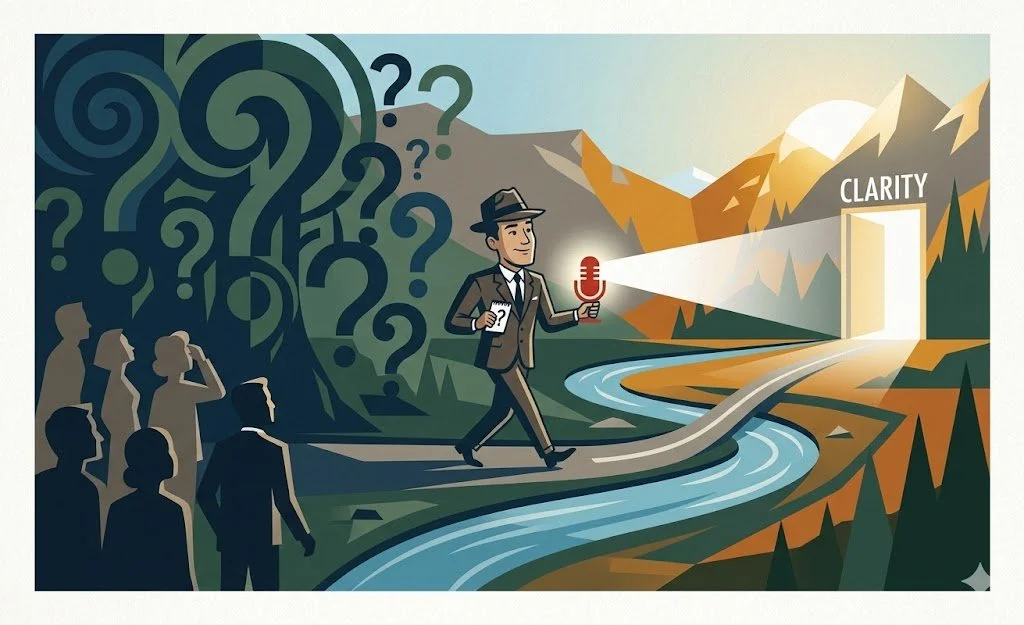
At CareCreatives, we focus on clarity before execution. Not because production doesn’t matter, but because production can’t fix a lack of direction. Creative work should serve the mission, not just the moment.
If the role of the podcast isn’t clear, everything downstream gets heavier. Conversations drift. Episodes stretch longer than they need to. The format keeps shifting. The team keeps producing, but the show itself never quite settles.
So this is usually where we start.
What would a successful podcast actually mean for the people you’re trying to reach?
Not in terms of metrics, but in terms of effect. What should it do for them when they press play, and what should stay with them after it ends?
If that isn’t clear, nothing else really locks into place.
A lot of podcasts have good information. Fewer are actually worth returning to.
The ones that are tend to feel intentional. Not built just to have a podcast, but built around something that matters to the person listening.
You can sense that, even if you can’t explain it right away.
And once it’s there, it changes how everything else is made.
Clarity is what makes everything else work.
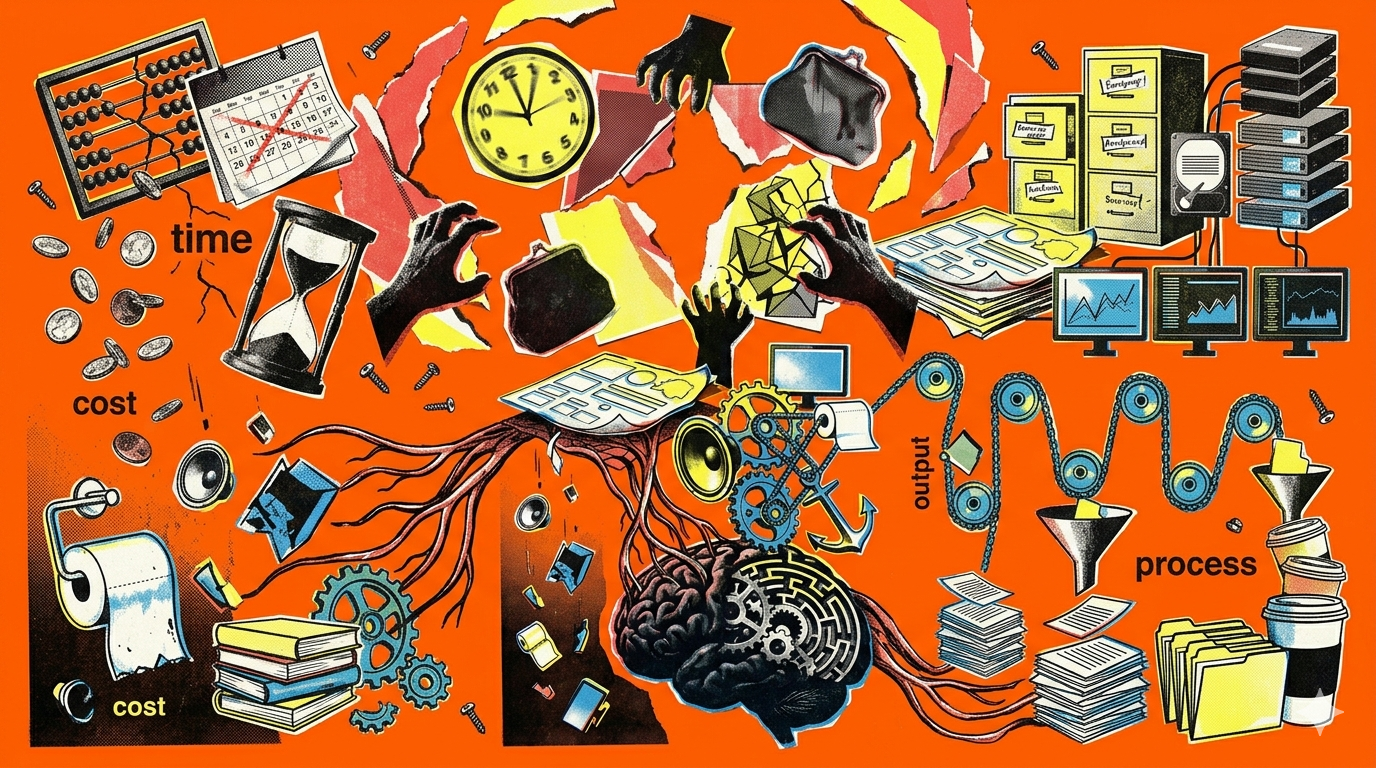
How Much Does This Actually Cost, and What Are We Paying For?
It’s a fair question. Most people don’t ask it out loud at first, but it’s sitting there underneath every conversation.
Is this worth it?
Not just in dollars, but in outcome. In clarity. In whether the work actually does what it’s supposed to do.
Because most organizations have already paid for something that looked right on the surface and didn’t hold up over time. A rebrand that didn’t translate. A website that didn’t guide anyone. A podcast that never found its voice.
So the question isn’t just about cost. It’s about trust.
It’s a fair question. Most people don’t ask it out loud at first, but it’s sitting there underneath every conversation. Is this worth it? Not just in dollars, but in outcome, in clarity, in whether the work actually does what it’s supposed to do. Because most organizations have already paid for something that looked right on the surface and didn’t hold up over time, a rebrand that didn’t translate, a website that didn’t guide anyone, a podcast that never found its voice. So the question isn’t just about cost. It’s about trust.

What Does It Actually Cost?
There isn’t a flat answer, and that’s not an attempt to avoid the question. It’s because the work itself isn’t flat. Cost varies based on a few real factors: scope, whether we’re working on a single piece or something that touches multiple parts of your organization; complexity, whether this is straightforward execution or requires rethinking how you communicate; lane, Brand, Print, Audio, Web, each with its own depth; and integration, whether these pieces are connected or isolated. A simple design request and a full brand system are not the same work. A podcast setup and a narrative-driven series are not the same work. A landing page and a structured digital presence are not the same work.
It’s easy to compare pricing when you assume the work is interchangeable, but most of the time it isn’t. There’s a phrase that gets repeated a lot in creative work: you can have it cheap, fast, or high quality, but you only get to pick two. It sounds a bit cliché, but it holds up more often than people expect. If something is fast and cheap, quality usually takes the hit. If it’s cheap and high quality, it won’t be fast. And if it’s fast and high quality, it won’t be cheap. What often happens is organizations try to hold all three at once, and the tension shows up later, deadlines slip, corners get cut, or the work needs to be redone.
There’s also a difference between execution and thinking. Execution can be quick, and it can be inexpensive, but it usually depends on someone else having already done the thinking. Strategic work takes longer. It involves asking better questions, clarifying what’s actually being said, and shaping something that holds together over time. That’s where cost increases, not because of excess, but because of depth. And this is where “cheap” and “effective” start to separate.
What Are You Actually Paying For?
Thinking
Before anything is made, there’s a layer most people don’t see. What are you actually trying to say? Who are you trying to reach? What does this need to do, not just how should it look? This is where a lot of projects either stabilize or drift. Clear thinking reduces noise, gives shape to decisions, and prevents you from building something that looks polished but doesn’t communicate. You’re not just paying for output, you’re paying for someone to sit in the tension long enough to understand what matters.
Craft
Once the direction is clear, the work still needs to be made well. Design that holds together across formats. Audio that feels intentional, not assembled. Writing that sounds like a person, not a template. Craft is what allows the work to carry weight over time. It’s not about perfection, but consistency, restraint, and knowing when something is finished, and when it isn’t. There’s a difference between something that’s technically complete and something that actually feels resolved.
Process
Good work doesn’t usually come from a single pass. There’s discovery, where assumptions get surfaced, collaboration, where ideas are tested, and refinement, where things are adjusted, sometimes more than once. Process isn’t there to slow things down, it’s there to prevent avoidable mistakes. Without it, projects tend to rely on instinct alone, and instinct can be helpful, but it’s not always enough when the stakes are higher. A structured process creates space for alignment and makes sure the work is moving in the right direction before too much is built on top of it.
Integration
Most organizations don’t need isolated pieces, they need things to work together. Your brand should inform your website, your website should support your content, and your content should reflect your voice. When these pieces are disconnected, it creates friction. You end up explaining the same thing in different ways, to different audiences, across different platforms, and over time that inconsistency becomes harder to manage. Integration brings cohesion. It doesn’t mean everything looks the same, it means everything feels like it belongs to the same story.
Experience
There’s also something less visible, but often more valuable. When you’re paying for creative work, you’re not just paying for the final product you can see, you’re paying for everything behind it, years of experience, training, mistakes that didn’t work, decisions that had to be undone, patterns that only become visible after doing this long enough, and wins that clarified what actually works. Most of that never shows up in a proposal or a file, but it shows up in the decisions being made.
Knowing what to push on and what to leave alone, knowing when something is off, even if it technically meets the brief, knowing what tends to cause problems later because you’ve seen it before. Experience doesn’t remove risk, but it reduces unnecessary ones. It helps avoid decisions that feel efficient in the moment but create friction down the line.
What You’re Not Paying For
It’s worth being clear about this too. You’re not paying for unnecessary services that pad the scope but don’t add value, inflated agency layers that separate thinking from execution, volume-based shortcuts that prioritize speed over clarity, or work that looks right but doesn’t serve your mission. CareCreatives Co. isn’t built for high volume. Capacity is limited on purpose. That means fewer projects, but more attention given to each one. It also means saying no when something doesn’t fit, not because it couldn’t be done, but because it wouldn’t be done well.
The Real Cost Question
Most conversations start with, “What does this cost?” A more helpful question might be, what does it cost to do this poorly? What does unclear communication cost your organization? It shows up in small ways at first. People don’t quite understand what you do, your message needs constant explaining, your materials don’t carry the same tone, your content doesn’t connect the way you expected. Over time, those small gaps compound. Opportunities get missed, trust takes longer to build, internal teams spend more time clarifying than moving forward. And eventually, you circle back to the work again, not because it failed completely, but because it didn’t hold.
A Different Kind of Partnership
CareCreatives Co. isn’t trying to be the cheapest option. It’s built for organizations that care about clarity, alignment, and doing the work in a way that can last. That usually leads to a different kind of relationship, less transactional, more collaborative. Not just delivering assets, but helping shape how those assets function in the real world. The goal isn’t more output, it’s better outcomes. And that tends to change how cost is understood, not as a line item to minimize, but as an investment in something that actually carries weight.

Do You Actually Need More Content, or Just More Clarity?
When an organization feels unseen, unheard, or misunderstood, the reflex is almost always the same:
“We need more content.”
More posts.
More videos.
More emails.
Maybe a podcast.
It feels productive. It feels faithful. It feels like momentum.
But historically, more output has never been the same thing as more impact.
When an organization feels unseen, unheard, or misunderstood, the reflex is almost always the same:
“We need more content.”
More posts.
More videos.
More emails.
Maybe a podcast.
It feels productive. It feels faithful. It feels like momentum.
But historically, more output has never been the same thing as more impact.
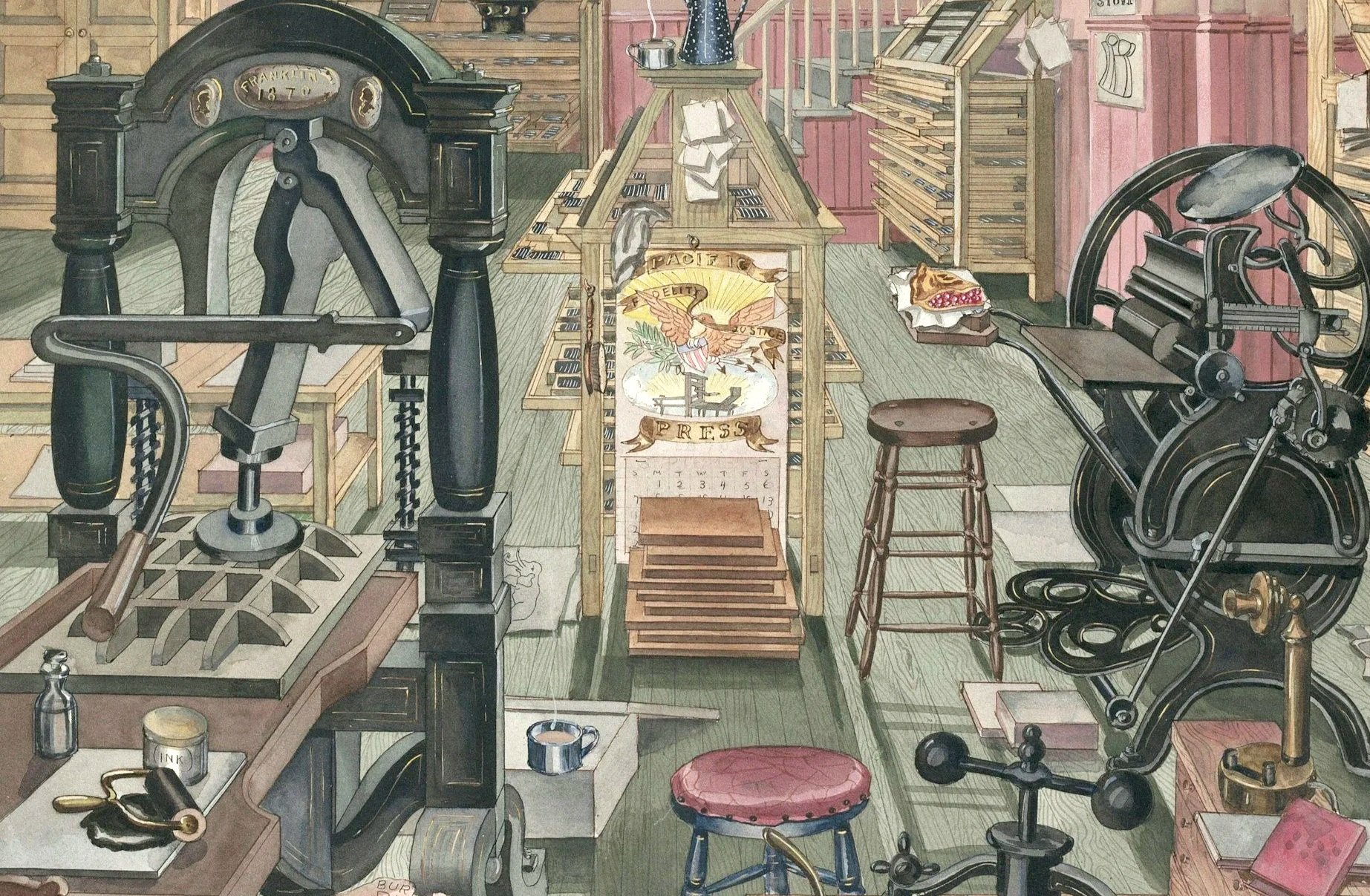
A Lesson from History: Printing Didn’t Fix Confusion
Make it stand out
Whatever it is, the way you tell your story online can make all the difference.
When the printing press was invented in the 15th century, it didn’t immediately create clarity. It created volume.
Pamphlets, tracts, manifestos, sermons, arguments, all multiplied overnight. Information exploded faster than understanding. In many ways, it intensified confusion before it ever produced reform.
The Reformation didn’t happen because there was suddenly more writing.
It happened because there was clearer conviction behind the writing.
The tool wasn’t the turning point.
Clarity was.
The same is true now.
The Question Leaders Are Actually Asking
When someone types into Google or asks an AI tool:
Why isn’t our nonprofit content working?
How do we communicate our mission better?
Do we need a new website or a podcast?
They are not really asking about platforms.
They are asking:
“Do people understand who we are, what we do, and why it matters?”
Until that question is answered, more content doesn’t help.
It just broadcasts the confusion more efficiently.
Even Jesus Didn’t Say Everything at Once
One of the more overlooked details in the Gospels is how often Jesus withheld clarity until the right moment.
He spoke in parables, not because He enjoyed being vague, but because clarity without readiness doesn’t land.
“Whoever has ears to hear, let them hear.”
That wasn’t a comment about volume.
It was a comment about alignment.
Jesus didn’t repeat the same message louder. He waited until people were ready to receive it.
There’s wisdom there for organizations today.
Content Without Clarity Is Just Noise

Here’s the uncomfortable truth most agencies won’t say:
You can have excellent design, strong audio, beautiful video, and thoughtful writing, and still fail, if the message underneath is unclear.
It shows up as:
Websites that look good but don’t lead anywhere
Podcasts that launch with excitement and quietly fade
Annual reports that are impressive but unread
Social media that feels busy and strangely hollow
This isn’t a talent problem.
It’s a clarity problem.
Clarity Is a Leadership Issue, Not a Creative One
In Scripture, moments of real movement almost always begin with clarity.
Moses didn’t lead Israel because he had the best communication tools.
He led because he was clear about who sent him and why he was going.
Nehemiah didn’t rebuild the wall because he had more labour.
He rebuilt it because the people understood the purpose and took ownership of it.
Clarity:
Simplifies decisions
Aligns teams
Reduces burnout
Gives creativity something solid to stand on
Without it, content becomes an attempt to explain yourself over and over again.
The Trap: Activity Disguised as Faithfulness
In churches and nonprofits, this gets complicated by good intentions.
There’s pressure to:
Stay visible
Steward donor support
Prove impact
Keep up with the pace of the world
So we compensate with activity.
More tools.
More platforms.
More output.
But Scripture never equates faithfulness with constant production.
Often, faithfulness looks like restraint.
Clarity usually costs us something.
Most often, it costs us busyness.
Five Questions Worth Asking Before Creating Anything New
Before launching a new website, podcast, campaign, or redesign, pause and ask:
1. What problem are we actually trying to solve?
Not “we need better marketing,” but:
Confusion?
Trust?
Engagement?
Internal misalignment?
Different problems require different solutions.
2. Who is this really for?
Jesus spoke differently to crowds, disciples, and opponents.
If everyone is your audience, no one is.
3. What would success look like in one year?
Not vague growth metrics, but:
Better conversations?
Clearer next steps?
Fewer misunderstandings?
If success isn’t defined, content becomes a treadmill.
4. What already exists that we’re underusing?
Often the answer isn’t new content, but:
Clearer structure
Better storytelling
Fewer platforms used well
5. What should we stop doing?
This is the hardest one.
Clarity always eliminates something.
Why This Matters Across Every Creative Discipline
This isn’t just about writing or content calendars.
Websites
Without clarity, they sprawl.
With clarity, they guide.
Podcasts
Without clarity, they drift.
With clarity, they endure.
Print and Design
Without clarity, they decorate.
With clarity, they communicate.
Tools don’t fix confusion.
They amplify whatever already exists.
Clarity Is an Act of Care
Clear communication:
Respects people’s time
Protects dignity
Reduces misunderstanding
Builds trust slowly and honestly
In trauma-informed and faith-based work, clarity is not optional.
It’s pastoral.
Telling fewer stories well is better than telling many stories poorly.
A Better Place to Start
Instead of asking:
“What content should we make next?”
Ask:
“What do we need to make clearer?”
Because when clarity is present, content stops feeling heavy.
It starts feeling inevitable.
Coming Next
Next, we’ll tackle one of the most practical follow-up questions leaders ask once clarity begins to form:
How much does this actually cost, and what are we paying for?
Because stewardship deserves honest answers.