
Why Most Podcasts Don’t Hold Attention
There are more podcasts than ever right now.
Better equipment, better production, easier access. You can start something that sounds polished without much friction anymore.
And yet, most of them don’t hold attention for very long.
Not because they’re poorly made. In a lot of cases, they sound great. Clean audio, thoughtful guests, even strong ideas underneath.
But something doesn’t carry.
There are more podcasts than ever right now.
Better equipment, better production, easier access. You can start something that sounds polished without much friction anymore.
And yet, most of them don’t hold attention for very long.
Not because they’re poorly made. In a lot of cases, they sound great. Clean audio, thoughtful guests, even strong ideas underneath.
But something doesn’t carry.
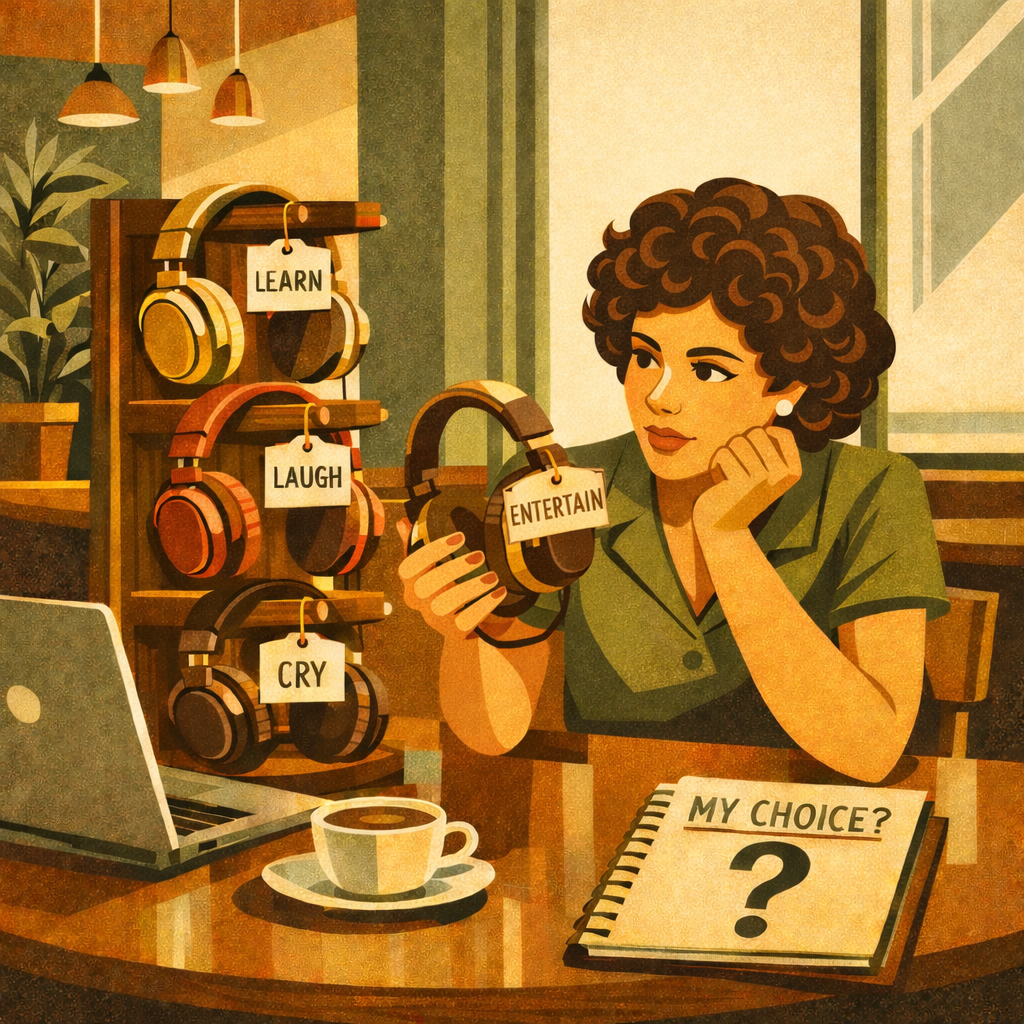
Just think about your own habits for a moment. When you open your podcast player and scroll through your feed, why do you choose the one you choose? It’s usually not random, and it’s rarely just because something is new.
There’s a reason you go back.
It’s easy to assume this is a production issue, but it usually isn’t. Most organizations focus on building the podcast before they’ve really clarified what it’s meant to do.
So the show gets launched. The branding is in place, the format is loosely defined, and episodes start coming out. But underneath all of that, the centre is still a bit unclear.
What is this actually for?
Over time, I’ve started to notice that the podcasts people come back to are doing something very specific for the listener. Not broadly, but in a way that holds steady from episode to episode.
They help people think more clearly. Or they give shape to something that felt hard to name. Sometimes they’re lighter, something you return to because it’s familiar. Other times they sit closer to the surface of real life, helping you process something you wouldn’t normally slow down for.
Even the ones that sit in the background are doing something. They’re keeping someone company while they drive, work, or try to fall asleep. That role might seem small, but it isn’t.
The difference is that the podcast knows the role it’s playing.
You can hear it in how the conversation moves, what gets cut, what gets left in, what the host keeps returning to. It doesn’t feel scattered or like it’s trying to carry too much at once. There’s a sense that it’s going somewhere, even if it takes its time.
What often happens, especially with organizations doing meaningful work, is that the podcast starts carrying more than it should. It’s trying to inform, inspire, advocate, interview, educate, and build awareness all at once. The intent is good, but the result is usually a lack of focus.
And when that happens, the listener has to do more work than they should. They have to figure out what this is for, and most won’t stay long enough to do that.
This is less about content and more about clarity.
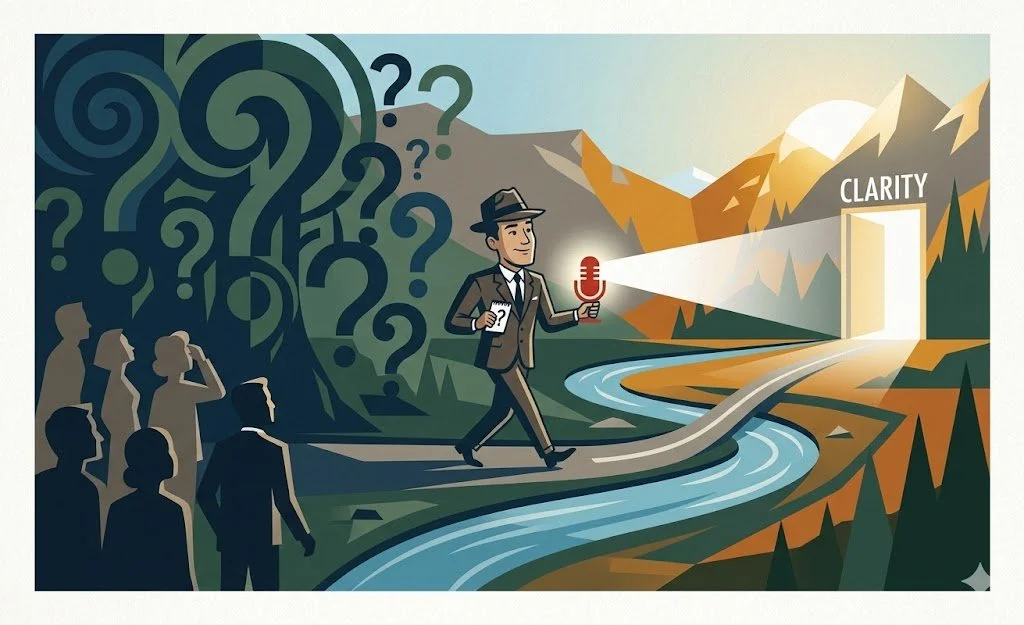
At CareCreatives, we focus on clarity before execution. Not because production doesn’t matter, but because production can’t fix a lack of direction. Creative work should serve the mission, not just the moment.
If the role of the podcast isn’t clear, everything downstream gets heavier. Conversations drift. Episodes stretch longer than they need to. The format keeps shifting. The team keeps producing, but the show itself never quite settles.
So this is usually where we start.
What would a successful podcast actually mean for the people you’re trying to reach?
Not in terms of metrics, but in terms of effect. What should it do for them when they press play, and what should stay with them after it ends?
If that isn’t clear, nothing else really locks into place.
A lot of podcasts have good information. Fewer are actually worth returning to.
The ones that are tend to feel intentional. Not built just to have a podcast, but built around something that matters to the person listening.
You can sense that, even if you can’t explain it right away.
And once it’s there, it changes how everything else is made.
Clarity is what makes everything else work.